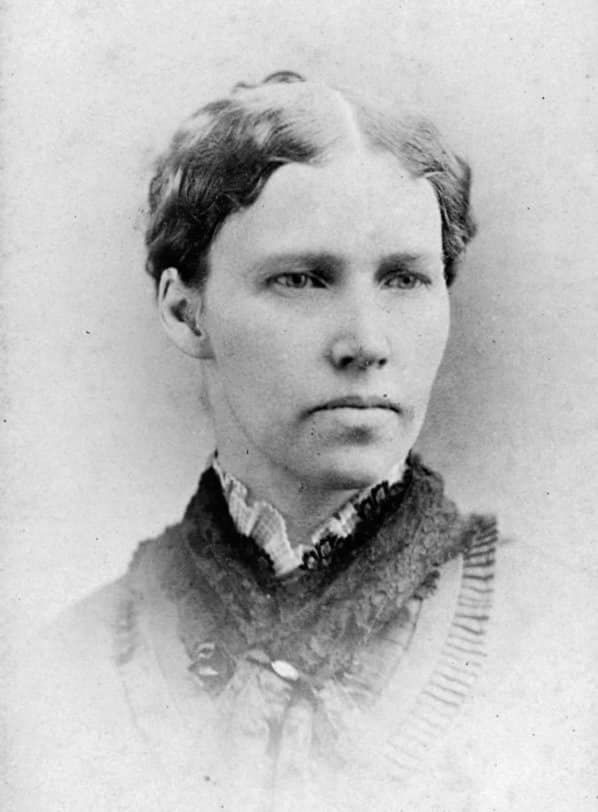
 Persis Sears Crowell Addy (March 28, 1837 – March 6, 1878) was a 19th-century philanthropist and patron from Cape Cod, Massachusetts.
Partner Anna Howard Shaw
Queer Places:
Boston University, 745 Commonwealth Ave, Boston, MA 02215, United States
Quivet Neck Cemetery, South Street, East Dennis, Massachusetts 02641 United States
Persis Sears Crowell Addy (March 28, 1837 – March 6, 1878) was a 19th-century philanthropist and patron from Cape Cod, Massachusetts.
Born into a prominent Cape Cod family—the daughter of wealthy East Dennis ship captain, merchant, and banker Captain Prince Sears Crowell and Polly Dillingham Foster Crowell—Persis grew up in an environment defined by civic influence, material comfort, and financial security.
She married John Addy, becoming a young widow upon his early death. Inheriting significant independent wealth, Persis settled on Cape Cod, where she actively supported regional institutions, churches, and civic projects.
During the summer of 1876, while living on Cape Cod, Persis met Dr. Anna Howard Shaw, who was preaching in local pulpits to put herself through divinity school. Shaw—who would later become one of America’s most prominent suffragists, physicians, and ordained ministers—was struggling through severe financial hardship as the sole female student in her class of 43 at the Boston University School of Theology.
Persis recognized Shaw's extraordinary talents and invited her to live with her, offering both total financial support and emotional partnership. In autumn 1876, Persis moved to Boston to set up a shared home with Shaw.
Shaw affectionately referred to their household as a "family of two," describing Persis as her first mature love who introduced her to a warm existence of comfort, culture, and deep emotional trust.
Persis virtually financed Shaw’s theological studies, ensuring she could complete her degree without the threat of starvation or freezing in unheated attic rooms.
Their shared life was cut short when Persis fell ill and died in March 1878 at the age of 40.
Persis Sears Crowell Addy's role in American history sits at the intersection of 19th-century women's higher education, the suffrage movement, and queer history:
Their partnership is a key historical example of what 19th-century scholars—such as historian Lillian Faderman in To Believe in Women: What Lesbians Have Done for America—classify as an early same-sex domestic union, romantic friendship, or "Boston marriage." These relationships allowed pioneering women to pursue higher education, professional careers, and public reform work without being tied to traditional patriarchal marriages.
The tragic loss of Persis deeply shaped Anna Howard Shaw's personal life. Shaw grieved her for decades, keeping journals that memorialized Persis even 24 years after her passing. The emotional and financial foundation provided by Persis during those critical years enabled Shaw to complete her degree, become an ordained minister, earn a medical degree, and ultimately serve as the president of the National American Woman Suffrage Association (NAWSA) alongside Susan B. Anthony and Lucy E. Anthony (Shaw's life partner in later years).
References:
 To Believe In Women: What Lesbians Have Done For America - A History – A Compelling Landmark Account of 19th and 20th Century Rights by Lillian Faderman |
Other references:
Support this project
This website is a passion project researched, developed, and funded entirely by me. If you find the content valuable and would like to help support the ongoing research and hosting costs, any contribution is deeply appreciated.
Thank you for keeping this independent resource alive!
My books on Amazon: Elisa Rolle's books